
Cargo is usually classified in three ways: by how it is packed and handled (containerized, breakbulk, dry bulk, liquid bulk or roll-on/roll-off), by its nature and the care it needs (general cargo or special cargo such as dangerous goods, perishables, high-value or oversized items), and by what it is for customs and pricing (its HS code and, for some trucking, its freight class). Together these classifications decide which equipment, vessel or aircraft your goods travel on, which rules apply and what you pay.
The seven common types of cargo in international shipping are containerized cargo, dry bulk, liquid bulk, breakbulk, Ro-Ro cargo, refrigerated cargo and project cargo. Each one moves through the supply chain differently, from the way it is loaded at origin to the way it is stored, cleared and delivered at destination. Getting the classification right at the start avoids the most common problems in international shipping: the wrong equipment, refused bookings, customs delays and surprise charges.
This guide explains each type of cargo with practical examples, how cargo is classified for handling and safety, and how classification affects your freight costs. If you already know what you are shipping and want to move it, our ocean freight services handle containerized, breakbulk and specialized cargo to and from Canada.
The 7 Main Types of Cargo at a Glance
The table below summarizes the seven main cargo types, what they include and how they usually travel. The sections that follow explain each one in more detail.
| Cargo type | Examples | How it usually moves |
|---|---|---|
| Containerized cargo | Consumer goods, electronics, furniture, clothing, machine parts | In 20 ft or 40 ft containers by ship, rail and truck |
| Dry bulk cargo | Grain, coal, iron ore, potash, cement, fertilizer | Loose in the holds of bulk carriers or rail hopper cars |
| Liquid bulk cargo | Crude oil, fuels, chemicals, vegetable oils | In tankers, tank cars, tank trucks or ISO tank containers |
| Breakbulk cargo | Steel coils, pipes, lumber, bagged goods, machinery | Piece by piece on general cargo or multi-purpose ships |
| Ro-Ro cargo | Cars, trucks, trailers, tractors, construction equipment | Driven on and off Ro-Ro vessels or car carriers |
| Refrigerated (reefer) cargo | Produce, seafood, meat, dairy, pharmaceuticals | In reefer containers, reefer ships or temperature-controlled trucks |
| Project cargo | Transformers, turbines, refinery modules, mining equipment | On flat racks, heavy-lift ships and specialized trailers |
What Is Cargo Classification and Why Does It Matter?
Cargo classification is the process of grouping goods by their physical form, handling needs and regulatory status so they can be shipped safely and correctly. It answers practical questions every shipment raises: Can this fit in a container? Does it need temperature control? Is it regulated as dangerous? Which tariff code applies at the border? How will it be priced?
For shippers, classification affects almost every part of a move. It decides the equipment, such as a dry container, reefer, flat rack or tank. It decides the transport mode and type of vessel, which our guide to the types of cargo ships explains in detail. It determines which safety rules, documents and labels apply, and it drives how carriers, ports and customs charge for the shipment.
Getting it wrong is expensive. Undeclared dangerous goods can lead to fines, refused cargo and safety incidents. Perishable goods shipped without the right temperature settings can be lost entirely. A wrong tariff classification can mean overpaid duty, penalties or a shipment held at the border. A clear description of the goods, with accurate weights, dimensions, packaging and any special requirements, is the foundation of every correct classification. If you are not sure how your goods should be classified, include the details when you ask us for a shipping quote and we will confirm the right category and equipment.
1. Containerized Cargo
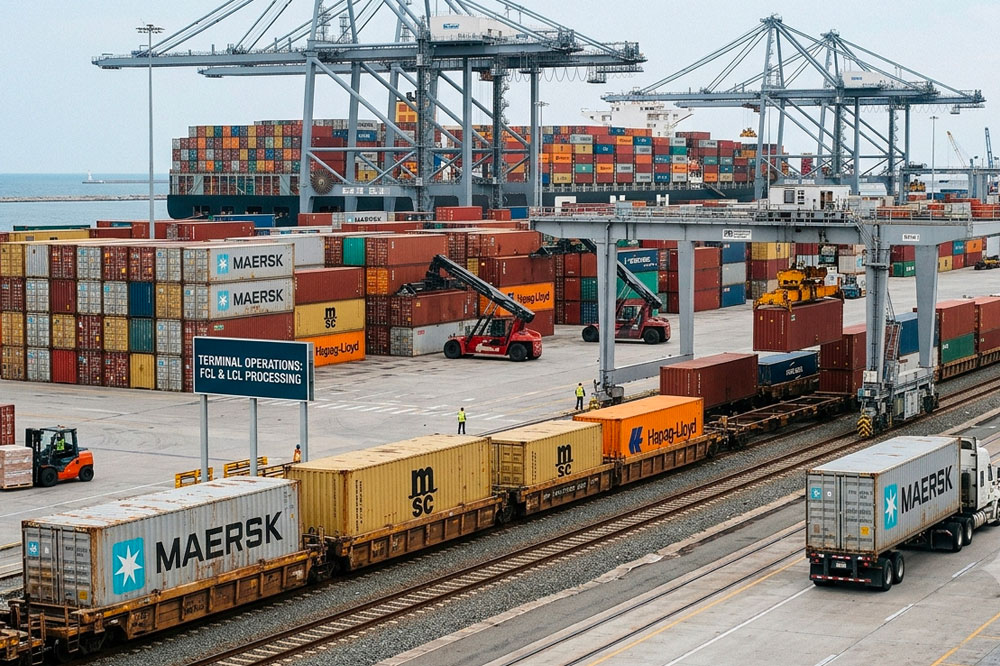
Containerized cargo is freight packed into standard shipping containers, usually 20 or 40 feet long, that move between ships, trains and trucks without the goods themselves being unloaded. It is the most common type of cargo for manufactured goods: consumer products, electronics, furniture, clothing, auto parts, machinery, packaged food and building materials all typically travel this way.
The strength of containerization is standardization. Because every container fits the same cranes, ships, rail cars and chassis, cargo can move from a factory in Asia to a warehouse in Ontario with very little handling, which reduces damage and theft. Specialized containers extend the system: high cubes for light, bulky goods, reefers for chilled or frozen cargo, open tops for tall items, and flat racks for heavy or wide pieces.
Shippers choose between a full container load (FCL), where one shipper uses the whole box, and less-than-container load (LCL), where several shippers share it. FCL is usually cheaper per unit once you have enough volume to fill most of a container, while LCL suits smaller shipments. Our guide to LCL vs FCL shipping explains how to decide.
2. Dry Bulk Cargo
Dry bulk cargo is unpackaged, loose material shipped in large quantities and loaded directly into a ship’s hold, a rail hopper car or a bulk truck. Common examples of loose cargo include grain, coal, iron ore, potash, sulphur, cement, sand, gravel, fertilizer, sugar and wood pellets. These are the raw materials of agriculture, energy, construction and heavy industry.
Dry bulk is moved by volume and weight rather than by unit. Shipments are often measured in thousands of tonnes and loaded with conveyors, grabs or spouts at specialized terminals. Canada is a major dry bulk exporter: grain and potash from the Prairies and coal from British Columbia and Alberta move by rail to west coast terminals and onto bulk carriers bound for Asia.
3. Liquid Bulk Cargo
Liquid bulk cargo is any fluid shipped in large volumes without individual packaging. Examples include crude oil, gasoline, diesel and jet fuel, chemicals, liquefied natural gas, vegetable oils, liquid fertilizers, molasses and even wine and fruit juice. Large volumes travel by tanker ship or pipeline, while smaller volumes move in rail tank cars, tank trucks and ISO tank containers.
Liquid cargo has strict containment requirements. Tanks must be compatible with the product and properly cleaned between loads, because residues can contaminate food-grade liquids or react with chemicals. Many liquids also need temperature control, either heating to keep them pumpable, such as some oils, or refrigeration and pressure, such as liquefied gases.
Many liquids are also regulated. Fuels, solvents, acids and many industrial chemicals are dangerous goods, which means they need correct classification, packaging, labels and documents under transport rules. For smaller quantities, drums and intermediate bulk containers (IBCs) packed inside a standard container are often more practical than a tank. If you ship regulated liquids, our dangerous goods shipping team can confirm the right packaging and paperwork.
4. Breakbulk Cargo (Non-Containerized Cargo)
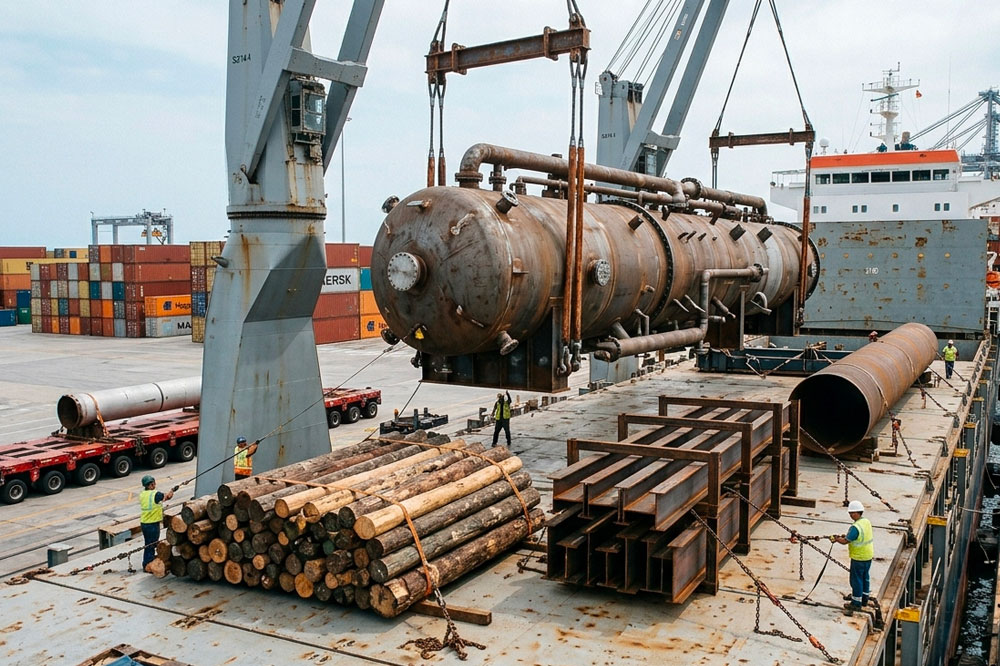
Breakbulk cargo is non-containerized freight loaded and unloaded as individual pieces, bundles or packages rather than in containers or as loose bulk. Typical examples include steel coils, beams and plates, pipes, lumber and timber, paper rolls, bagged cement or fertilizer, and large machinery. Each unit is lifted by crane or forklift and secured in the hold or on deck.
Breakbulk is used when cargo is too long, heavy, wide or awkward for a container, or when the destination port does not have container facilities. It is often moved on general cargo or multi-purpose ships with their own cranes. In Canada, forestry products and steel are common breakbulk cargoes on both coasts, and breakbulk remains important for resource projects in remote areas.
5. Ro-Ro Cargo
Ro-Ro, short for roll-on/roll-off, is cargo that moves on its own wheels or tracks and can be driven or towed onto a vessel. It includes new and used cars, SUVs, trucks, buses, trailers, tractors, combines, construction equipment and mining vehicles. Ro-Ro cargo travels on specialized car carriers and Ro-Ro ships with internal ramps and multiple vehicle decks.
The main advantage of Ro-Ro is simple, low-cost handling: there is no lifting and no container to pack, so loading is fast and the risk of handling damage is low. Vehicles and machinery are secured to the deck with lashing points designed for the purpose. Non-running units can sometimes be moved with tow equipment, but they usually cost more and may need to travel as breakbulk or on a flat rack instead.
Ro-Ro rules also affect what you can ship. Vehicles generally must be empty of personal belongings, fuel levels are limited, and some ports and carriers require cleaning and inspection, especially for used machinery that could carry soil or pests. For a comparison of Ro-Ro with container and air options for vehicles, see our guide to Ro-Ro vs container vs air freight, or our car shipping services for vehicles moving within Canada or overseas.
6. Refrigerated (Reefer) Cargo
Refrigerated cargo, often called reefer cargo, is any shipment that must be kept within a set temperature range. Chilled goods such as fresh fruit, vegetables, flowers and dairy are typically kept just above freezing, while frozen goods such as meat, seafood and ice cream are kept well below it. Pharmaceuticals, vaccines and some chemicals also need tight temperature control.
Most reefer cargo travels in refrigerated containers, each with its own cooling unit that plugs into power on ships, at terminals and on trucks or rail. The shipper sets the temperature, and for some fresh produce also the ventilation and humidity, on the booking. Reefer containers usually pre-cool before loading, and cargo should already be at the correct temperature when it goes in, because reefers are designed to maintain temperature rather than cool warm cargo quickly.
Cold chain failures are expensive and often total losses. Common causes include incorrect set points, delays at terminals without power, and gaps during transfers between modes. Reefer cargo also faces stricter inspection at the border, especially food and medical products. Clear instructions, reliable equipment, monitoring and fast customs clearance are what keep reefer cargo safe from origin to destination.
7. Project Cargo
Project cargo, sometimes called heavy-lift or out-of-gauge cargo, covers large, heavy or high-value items that need special planning to move. Examples include power transformers, wind turbine blades and towers, refinery and petrochemical modules, mining equipment, factory production lines and bridge sections. Project shipments are usually tied to a construction or industrial project, so they must arrive in the right order and on schedule.
Moving project cargo involves engineering as well as logistics. Route surveys check bridges, power lines and road clearances; lifting studies confirm crane capacity; and sea fastening designs secure the cargo on the vessel. On land, oversized loads need permits, escorts and sometimes road closures, and transport may combine heavy-lift ships, barges, rail and multi-axle trailers.
Because a single delay can hold up an entire project, planning usually starts months before the cargo is ready. A forwarder with project experience coordinates the manufacturers, carriers, port operators and authorities so each piece moves as planned. Our project cargo services handle oversized and heavy shipments from origin to site.
General Cargo vs. Special Cargo: Classification by Handling Needs
Beyond the seven physical types, carriers also classify cargo by how much care it needs. General cargo is ordinary freight that has no special handling, temperature or safety requirements, such as clothing, furniture, books or packaged hardware. Special cargo needs extra handling, documentation or protection, and it is priced and managed differently, especially in air freight.
- Dangerous goods: materials that are hazardous in transport, such as fuels, chemicals, aerosols, gases and lithium batteries.
- Perishable cargo: food, flowers and pharmaceuticals with a limited shelf life or temperature limits.
- High-value cargo: electronics, jewellery, luxury goods and documents that need security measures.
- Oversized and heavy cargo: pieces beyond standard container or aircraft door dimensions.
- Fragile cargo: glass, ceramics, artwork and precision instruments that need protective packing.
- Live animals: transported under strict welfare rules and specialized handling.
Dangerous goods follow an internationally recognized system of nine hazard classes: explosives, gases, flammable liquids, flammable solids, oxidizers and organic peroxides, toxic and infectious substances, radioactive material, corrosives, and miscellaneous dangerous goods, which includes lithium batteries. Canada’s Transportation of Dangerous Goods (TDG) Regulations use the same classes for domestic transport. If you are importing valuable goods, our guide to shipping high-value cargo from China covers the security steps that apply.
How Cargo Is Classified for Customs and Freight Pricing
Cargo is also classified by what it is, not just how it moves. For customs, every product is assigned a code under the Harmonized System (HS), an international nomenclature used by most countries. The first six digits are shared worldwide, and Canada extends them to a ten-digit classification in its Customs Tariff. The code determines the duty rate, whether the goods need permits or inspections from other government departments, and what trade statistics record.
Classification mistakes are one of the most common reasons for customs delays and penalties in Canada. A product described too vaguely on the commercial invoice, or assigned the wrong code, can be held for review, reassessed for more duty, or fined under the Administrative Monetary Penalty System. Licensed customs brokers classify goods as part of the entry process; our customs brokerage services handle this for importers, and our guide to import fees in Canada explains how duties and taxes are calculated.
For pricing, cargo type and characteristics drive cost. Ocean freight is priced per container or per cubic metre and tonne, air freight by chargeable weight, and trucking by weight, space and density. In the United States, LTL freight is often rated by freight class under the National Motor Freight Classification, while Canadian carriers more often price LTL on weight, space and density. Our guide to LTL freight rates explains how this works.
Frequently Asked Questions About Types of Cargo
How many types of cargo are there?
In international shipping, there are seven main types: containerized, dry bulk, liquid bulk, breakbulk, Ro-Ro, refrigerated and project cargo. Cargo is also grouped as general or special cargo based on handling needs.
What are examples of loose cargo?
Loose cargo, or dry bulk, includes grain, coal, iron ore, potash, sand, gravel, cement and fertilizer. In some contexts, loose cargo also means individual cartons or pieces shipped without pallets or containers.
What is non-containerized cargo?
Non-containerized cargo is freight shipped outside standard containers, mainly breakbulk, bulk and Ro-Ro cargo, such as steel, timber, machinery, vehicles and loose commodities.
What is an example of liquid bulk cargo?
Crude oil, gasoline, diesel, chemicals, vegetable oils and liquefied natural gas are all common liquid bulk cargoes.
What is the difference between general and special cargo?
General cargo needs no special handling. Special cargo, such as dangerous goods, perishables, high-value, fragile or oversized items, needs extra care, documentation or equipment.
Choosing the Right Shipping Method for Your Cargo
Every type of cargo comes with its own equipment, handling methods, rules and costs. Containerized goods benefit from standard boxes and frequent sailings. Dry and liquid bulk depend on specialized terminals and vessels. Breakbulk and project cargo need careful engineering and planning. Ro-Ro simplifies vehicle shipping, and refrigerated cargo depends on an unbroken cold chain. On top of that, special cargo rules and customs classification decide what documents and permits you need.
The simplest way to get the classification right is to start with an accurate description of your goods: what they are, how they are packed, their weights and dimensions, their value and any temperature or safety requirements. With that information, a freight forwarder can recommend the right equipment, mode and routing, and make sure the paperwork matches the cargo. For air shipments of special cargo, our air freight services handle dangerous goods, perishables and high-value shipments as well.
Cargopedia ships every type of cargo described in this guide, to and from Canada, with customs clearance and delivery handled in one place. Tell us what you are shipping and request a shipping quote, and we will recommend the most efficient way to move it.