
Rail freight rates in Canada are set by the railways for each lane and type of equipment, not by a public price list per kilogram. A shipper pays a rate per railcar or per container between two points, a fuel surcharge that changes weekly or monthly, and the costs of getting freight to and from the rail line. The rail leg is only one part of the price, so a rail quote is only comparable with a truck quote once terminal moves, storage and delivery are added. This guide, from an international freight forwarder in Canada, explains each part.
The short answer: rail is usually the cheapest way to move heavy or high-volume freight over long distances in Canada, and less competitive on short routes where trucking at both ends adds up. According to the Railway Association of Canada, average rail freight revenue was 4.16 cents per tonne-kilometre in 2023. That is an industry average across grain, coal, chemicals and containers, not a quote, but it shows how low the cost per tonne can be on long hauls.
This table compares the two ways most Canadian shippers use rail and what drives the cost of each.
| Factor | Carload rail | Intermodal rail | Why it matters |
|---|---|---|---|
| What you ship in | Boxcar, gondola, hopper, tank or flatcar | Container or trailer on a railcar | Sets which freight fits and how it is handled |
| Typical load | About 85.9 tonnes per carload (2023 average) | About 15.3 tonnes per unit (2023 average) | Heavy bulk freight spreads the rate over more tonnes |
| Access needed | Rail siding at origin or destination, or a transload site | Any dock, via truck to and from a rail terminal | No siding means extra handling or trucking |
| How it is priced | Per car, by origin, destination and commodity | Per container, by lane and equipment | Rates are quoted per unit, not per pallet |
| Fuel surcharge (CN) | Dollars per mile, set monthly | Percentage of linehaul, set weekly or monthly | Can change the total noticeably month to month |
| Main extra charges | Car demurrage, switching, transloading | Drayage at both ends, terminal storage | Often the difference between a cheap and an expensive move |
How rail freight rates are set in Canada
Two Class I railways carry most freight in Canada: CN and CPKC. Each publishes tariffs for some traffic, but much business freight moves on confidential contract rates negotiated for a lane, a commodity and a volume. A tariff or contract rate is normally quoted per railcar or per container between an origin and a destination station, with a separate fuel surcharge and rules for storage, switching and loading time. Unlike LTL trucking, there is no weight-bracket price for a few pallets; the unit you book is the unit you pay for.
Several things move rail freight cost on a given lane. Distance matters, but less than on a truck, because the fixed costs of building a train, switching cars and handling containers at terminals are spread over the whole trip. Direction matters: lanes where railways need to reposition empty equipment can be cheaper in one direction than the other. The commodity matters for carload freight, since dangerous goods, high-value products and cargo needing special cars cost more to handle. Volume matters most of all. A shipper offering steady weekly carloads can negotiate rates that a one-time shipper will not see.
Competition also shapes pricing. Many industrial sites are served by only one railway, and those shippers have less bargaining power than a site with access to both. Canadian law gives shippers some tools to deal with that, covered further below. The Railway Association of Canada reported that average rail freight rates rose 2.1% in 2023, less than the 3.9% rise in the Consumer Price Index that year, but individual lanes can move by far more than the average.
Carload vs intermodal freight rates
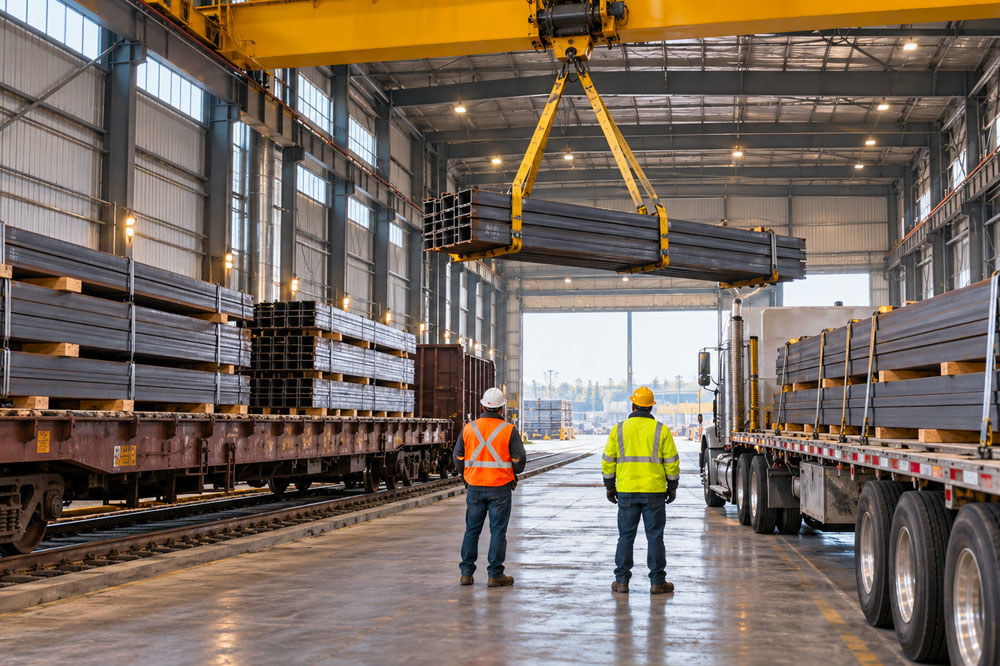
Carload rail suits freight that is heavy, bulky or shipped in large volumes: grain, lumber, steel, chemicals, fertilizer, paper and building materials. A carload moves in a railcar from a siding at the shipper’s plant to a siding at the receiver, or to a transload terminal where it is moved onto trucks. Because a single car carried an average of 85.9 tonnes in 2023, the rate per tonne can be very low. The trade-off is access: without a siding, freight has to be trucked to a transload facility, which adds handling cost and time at each end.
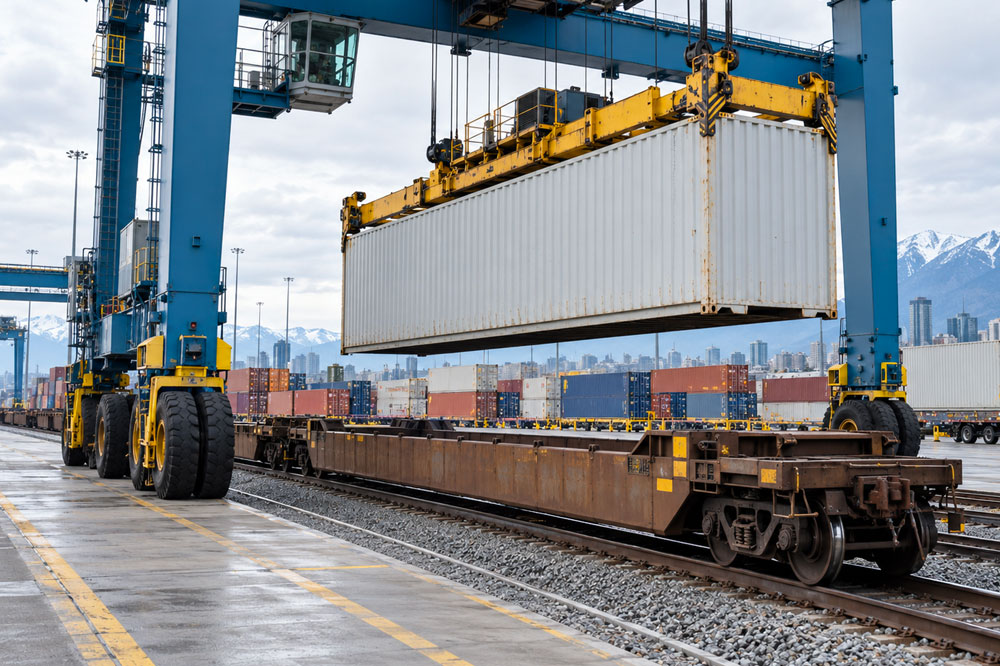
Intermodal rail suits packaged goods, pallets and imported containers. Freight is loaded into a container or trailer at your dock, trucked to a rail terminal, carried by train, and trucked again to the receiver. Domestic intermodal in Canada relies heavily on 53-foot containers. CN’s standard 53-foot container offers 3,901 cubic feet and holds 30 pallets of 48 x 40 inches, about the same as a highway trailer, and heated versions protect freight from freezing in winter. Intermodal rates are quoted per container for the rail leg, but the shipper also pays for drayage at both ends and any storage at the terminal.
Which option is cheaper depends on the freight. Heavy bulk products usually favour carload, especially where the shipper or receiver has a siding. Palletized goods moving between cities with rail terminals, such as Toronto, Montreal, Winnipeg, Calgary and Vancouver, usually fit intermodal. For shippers with neither a siding nor a full container’s worth of freight, LTL or truckload may still be the better choice.
Fuel surcharges and other rail shipping cost
Fuel is the part of rail shipping cost that moves most often. CN publishes three fuel surcharge tariffs, all based on the U.S. Energy Information Administration’s on-highway diesel price. For carload traffic, tariff CN 7403 charges a set amount per mile for each car: for intra-Canada traffic it is CAD 1.0150 per mile in October 2026, up from CAD 0.8680 in September. For intermodal, CN 7404 is a weekly percentage of the linehaul charge, which reached 42.25% for intra-Canada traffic for the week of September 28, 2026. CN 7405 is a monthly intermodal version, set at 34.20% for October 2026.
These figures show why a rail quote should always state the fuel basis. A base rate that looks attractive can land very differently once a surcharge of 30% or 40% is added, and the percentage for the week you ship may not be the one on the quote.
Other charges come from time and handling. Carload shippers get a set period to load or unload a car before car demurrage applies per car per day. Intermodal containers get limited free time at the rail terminal before storage begins. Transloading, switching between railways, and trucking at each end are billed separately unless the quote is door to door. In winter, heated equipment or protective service adds cost but prevents freeze damage to liquids, paints, food and chemicals.
Rail vs truck cost
The rail vs truck cost comparison depends mainly on distance, weight and time. On long routes such as Toronto to Calgary or Vancouver, rail usually wins on price per tonne, and the gap grows with heavy freight. On shorter corridors such as Toronto to Montreal, the savings on the linehaul are often smaller than the cost of trucking to and from two rail terminals, so a direct truck can be cheaper and faster.
Fuel efficiency explains part of rail’s advantage. The Railway Association of Canada reports that Canadian railways moved 228 revenue tonne-kilometres per litre of fuel in 2023, which means one litre moves one tonne of freight about 228 kilometres. That efficiency also helps shippers with emissions reporting, since rail produces far less carbon per tonne-kilometre than trucking.
Rail has costs that do not appear in the rate. Transit is usually longer than a team truck, and freight must fit rail schedules and terminal cut-offs. Service can be affected by weather in the mountains and by labour disruptions; in August 2024, both CN and CPKC stopped operating at the same time during a labour dispute, which left many shippers scrambling for trucks. A plan that combines rail for base volume with trucking for urgent orders often gives the best total cost, and keeps freight moving if rail service is interrupted.
Interswitching and better rail freight rates
Shippers served by a single railway are not without options. Under the Canada Transportation Act, a shipper whose siding is within 30 kilometres of an interchange can ask for its traffic to be handed to a competing railway at a rate set each year by the Canadian Transportation Agency. The regulated rate is charged per car and depends on the distance zone, with a much lower rate per car for large blocks of cars than for single cars. The Agency also offers mediation and final offer arbitration for rate and service disputes.
Most shippers will never use these tools directly, but they explain why rail pricing is negotiable. The practical steps are simpler. Commit volume where you can, because regular traffic earns better rates than spot moves. Be flexible on timing, since loading to the railway’s schedule and avoiding peak weeks reduces cost. Load equipment fully, whether that means 30 pallets in a 53-foot container or a full carload. And always compare rail on a door-to-door basis, including drayage, storage and fuel, against the same shipment by truck.
Rail freight rates reward shippers who plan: steady volume, full equipment and realistic timelines turn rail into the lowest-cost option for long, heavy moves. Before choosing, get both quotes on the same basis: commodity, weight, origin, destination, rail access at each end, terminal moves and fuel. If you want help building that comparison, you can compare rail and truck for your lane with a forwarder.