
Global trade is undergoing a fundamental transformation. Technology and operational efficiency are now the only real drivers of growth. For companies managing international freight, adapting to these shifts is a matter of survival. Moving cargo across borders is getting more complex, demanding a sharper approach to supply chain strategy and digital integration. At Cargopedia, we provide the roadmap for these changes, helping shippers understand how new industry standards protect their bottom line. The industry is moving past simple transportation. Success now depends on predicting disruptions and optimizing every stage of the transit process. Analyzing the strategic shift in global trade requires a clear look at the practical obstacles tied to every technological advancement.
| Future Logistics Trend | Core Operational Challenge |
| 1. AI-Driven Routing | High initial investment and data quality requirements. |
| 2. Autonomous Fleet | Regulatory hurdles and complex insurance liability. |
| 3. Green Freight (Net-Zero) | Infrastructure gaps for electric/hydrogen refueling. |
| 4. Blockchain Security | Lack of standardized protocols across global partners. |
| 5. IoT Cargo Tracking | High cost of sensor deployment for low-margin goods. |
| 6. Micro-Fulfillment Hubs | Skyrocketing real estate costs in urban city centers. |
| 7. Predictive Analytics | Difficulty in forecasting “Black Swan” global disruptions. |
| 8. Robotic Warehousing | Technical downtime and maintenance of complex hardware. |
Over the next few years, the focus will stay on high-level data management and operational resilience. Shippers who adopt these trends early will see faster transit times and lower costs. This guide analyses the core developments redefining global freight. We focus on practical innovation and a commercial perspective to help your business evolve in a fast-paced market.
How Fleet Automation is Redefining the Future of Logistics
Artificial intelligence is no longer a futuristic concept in the logistics sector; it is a functional tool used to streamline fleet management and reduce operational waste. Machine learning algorithms are now capable of analysing massive datasets to predict the most efficient routes, accounting for weather, traffic, and port congestion in real-time. This level of automation allows carriers to cut fuel consumption and minimize the idle time of rigs, which directly impacts the total cost of shipping. Autonomous systems are also being integrated into warehouse operations, where robotic sorting and packing increase the speed of order fulfillment. For a commercial logistics network, the goal of AI is to remove human error from the planning phase, ensuring that every asset is utilized to its maximum potential. As these technologies mature, we are seeing a shift toward fully autonomous long-haul trucking, which promises to solve the ongoing driver shortage and extend operational hours without compromising safety standards.
- Predictive route optimization to lower fuel costs and transit times.
- Automated warehouse systems for faster sorting and loading.
- AI-driven maintenance schedules to prevent mechanical breakdowns.
- Enhanced load balancing to ensure every trailer is utilized efficiently.
Sustainable Freight: Powering the Future of Logistics
The logistics industry is under increasing pressure to adopt sustainable practices as global regulations on carbon emissions become stricter. Decarbonizing the freight network is now a commercial necessity, as many international partners require proof of green initiatives before signing long-term contracts. This shift involves the adoption of electric heavy-duty trucks for short-haul drayage and the exploration of alternative fuels like hydrogen for long-distance shipping.
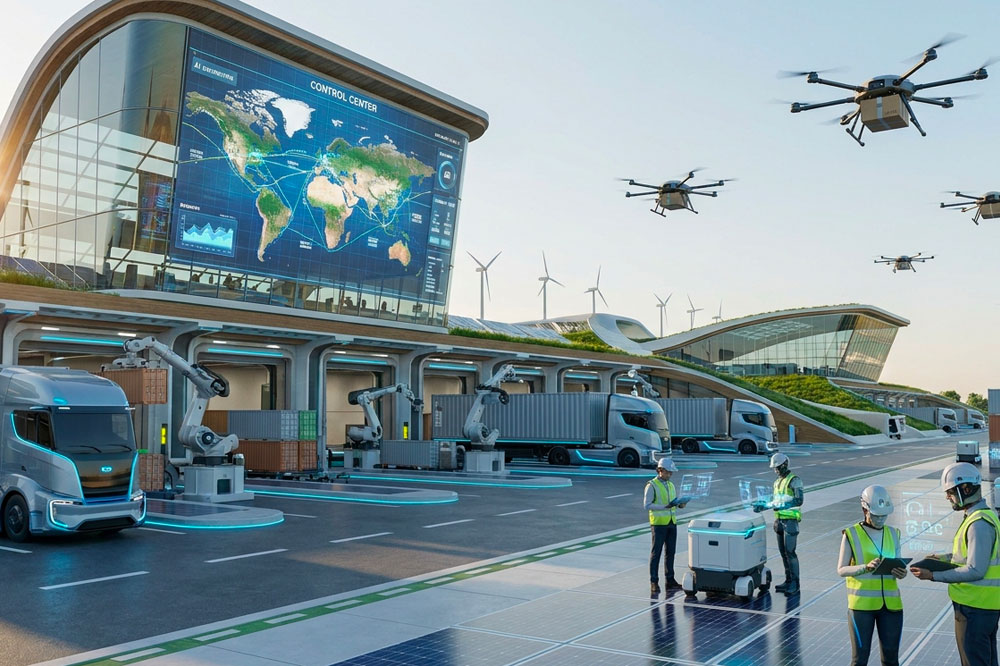
Beyond vehicle technology, green logistics also focuses on “circular” supply chains, where packaging materials are reused and waste is minimized throughout the distribution process. Businesses that invest in sustainable transport now will avoid future carbon taxes and position themselves as leaders in a socially conscious market. The transition to green energy is not just about the environment; it is about building a more efficient and future-proof logistics infrastructure that can withstand the energy volatility of the coming decades.
- Transition to electric and hydrogen-powered vehicle fleets.
- Implementation of carbon tracking software for transparent reporting.
- Optimization of load consolidation to reduce the number of empty miles.
- Use of eco-friendly packaging and reusable shipping containers.
Digital Visibility and the Power of Real-Time Cargo Data
In the modern shipping environment, data is just as valuable as the cargo itself. Digital visibility allows shippers to track their assets with precision, providing real-time updates on location, temperature, and handling conditions. This transparency is achieved through the integration of Internet of Things (IoT) sensors and blockchain technology, which creates an unchangeable record of every transaction and movement. For businesses handling high-value or sensitive goods, this level of detail is essential for maintaining quality control and insurance compliance. When a delay occurs, real-time data allows logistics managers to react instantly, rerouting freight or notifying stakeholders before the disruption impacts the end user. The future of the supply chain depends on this open flow of information, moving away from fragmented communication toward a unified digital ecosystem where every partner has access to the same live data.
- IoT sensors for live monitoring of cargo temperature and humidity.
- Blockchain integration for secure and transparent documentation.
- Cloud-based dashboards for instant access to shipping manifests.
- Automated alerts for potential delays or route deviations.
Mastering Last-Mile Delivery with Micro-Fulfillment
As e-commerce continues to grow, the challenge of “last-mile” delivery in congested urban areas has become a top priority for logistics providers. The future of urban delivery lies in the development of smart hubs and micro-fulfillment centres located closer to the end consumer. These localized warehouses allow for rapid sorting and dispatch, significantly reducing the time and cost associated with the final leg of the journey. In addition to physical infrastructure, the use of small electric vans and even autonomous delivery drones is becoming more common in major cities. This hyper-local approach to warehousing minimizes the distance that individual packages need to travel, easing urban traffic and lowering the carbon footprint of each delivery. For commercial logistics companies, mastering the urban landscape means rethinking traditional distribution models in favour of a more agile, decentralized network that can meet the demand for same-day or next-day shipping.
- Micro-fulfillment centres to reduce distance to the end user.
- Electric delivery vans for emission-free urban navigation.
- Drone delivery testing for small, urgent shipments in high-density areas.
- Dynamic scheduling to avoid peak-hour traffic congestion in city centres.
Conclusion
The evolution of global trade is being defined by a move toward total digital integration and operational transparency. While the challenges of the coming years are significant, they also offer opportunities for businesses to build more resilient and efficient supply chains. Success in this new era requires a focus on technology that provides a clear return on investment, from AI-driven routing to sustainable fleet management. By staying informed about these trends and adapting to the changing regulatory landscape, shippers can ensure their operations remain competitive on a global scale. The future of logistics is about more than just moving boxes; it is about managing a complex web of data and technology to ensure that trade continues to flow smoothly in an increasingly unpredictable world.